Phase I Report
Parallel Performance Evaluation (Process-based Matrix Multiplication)
This page includes the full standalone HTML report inside the Phase I section of the website.
Use the button below if you want to open the report as a separate full page.
Embedded Report
6) Discussion
In theory, parallel processes can reduce execution time by dividing computation across cores. However, Phase I results show that for the tested sizes (1200– 2400), using 4 processes provided minimal or negative performance impact.
Why performance did not improve
-
Process Creation Overhead
Creating multiple processes with fork() introduces overhead that can dominate short executions.
-
Synchronization Cost
The parent must wait for all children (wait()), so total time includes coordination overhead.
-
Problem Size Threshold
For these matrix sizes, the computation may not be large enough to outweigh overhead.
For significantly larger matrices (e.g., N=10000), performance gains may become more likely because computation time would dominate process overhead.
6.1 Implications for Parallel Programming
- Parallelism improves performance only when workload exceeds overhead cost
- Using all available cores does not guarantee better performance
- There is a minimum problem size where parallelization becomes beneficial
6.2 Experimental Limitations
- Virtualization overhead: VM layer may add performance penalties
- ARM64 architecture: Different characteristics than x86 systems
- Initialization overhead: Random initialization adds non-parallelizable work
7) Conclusion
In Phase I, we successfully:
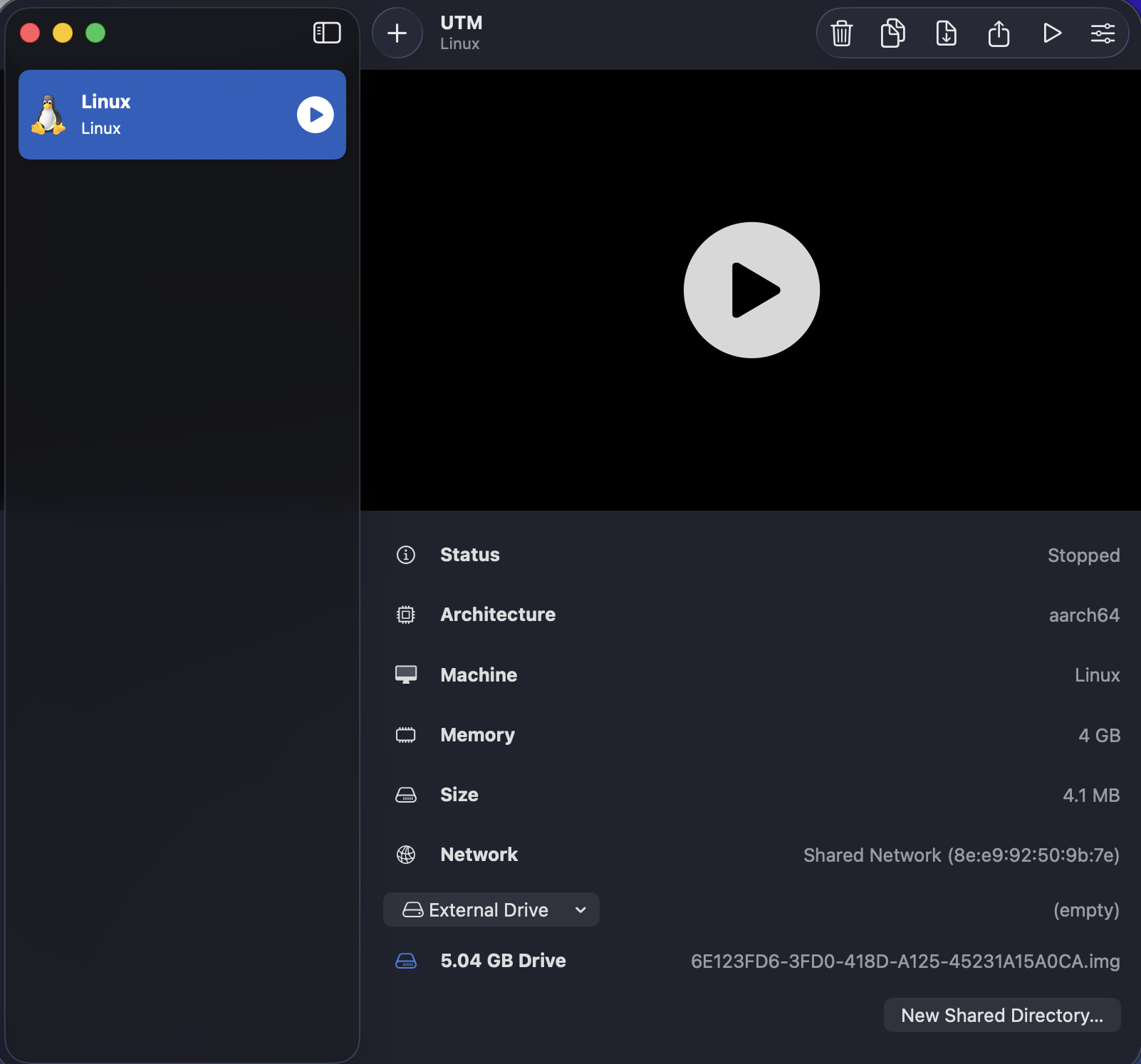
- Set up Ubuntu Linux (24.04.3 LTS ARM64) in a virtual machine
- Installed GCC and development tools
- Compiled and executed the provided program
- Tested 6 configurations
- Collected execution-time data across all runs
Key findings
- Parallel processes did not provide meaningful speedup for these sizes
- Process creation and synchronization overhead likely dominated runtime
- Larger problem sizes may be required to observe clear benefits
Working VM
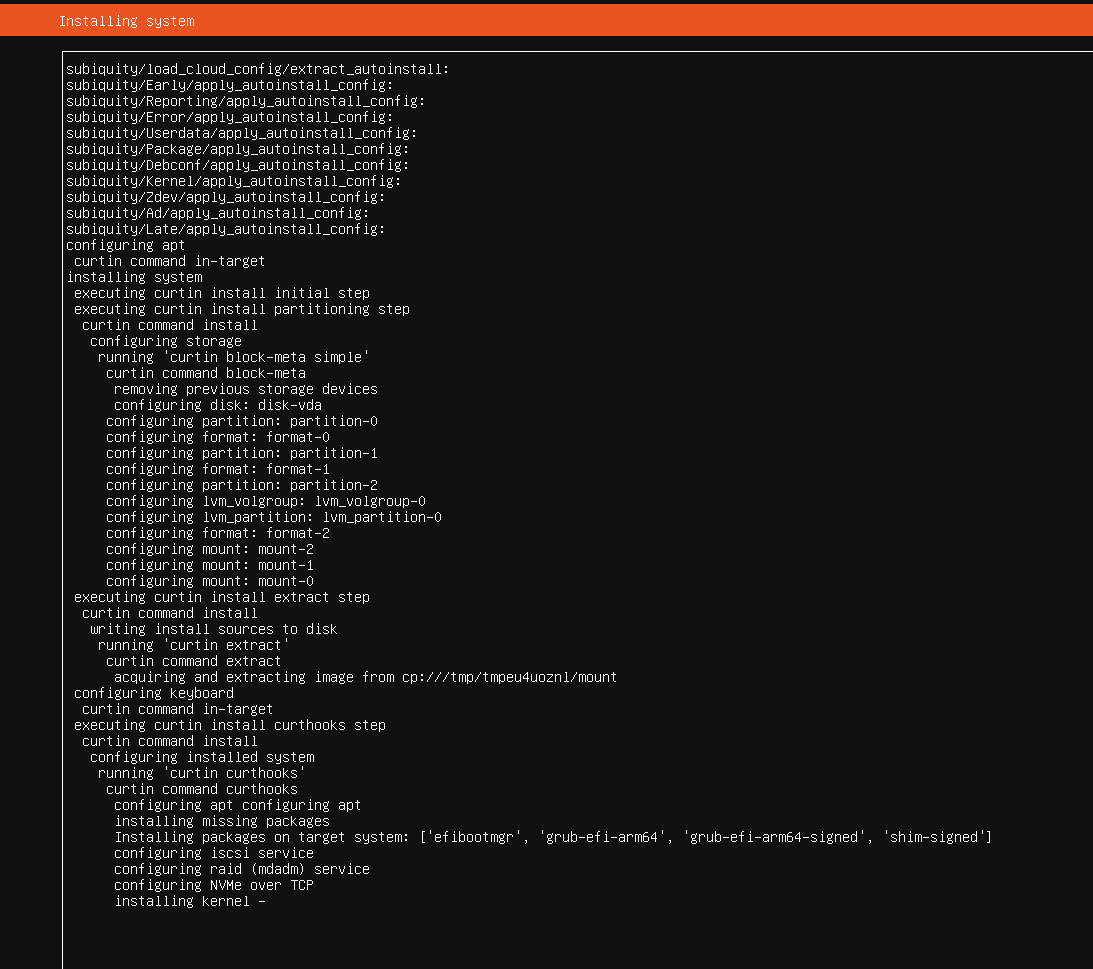
Installing Kernel
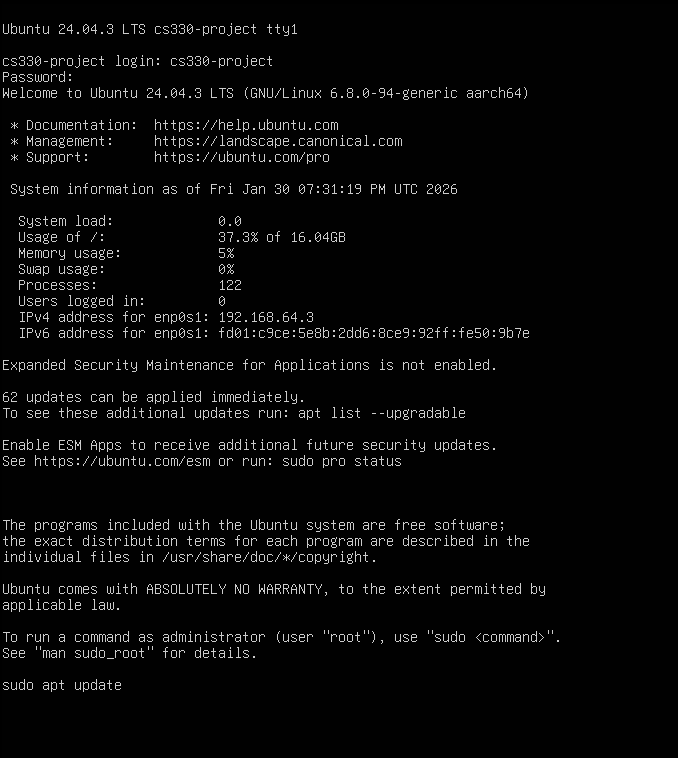
Log in and update
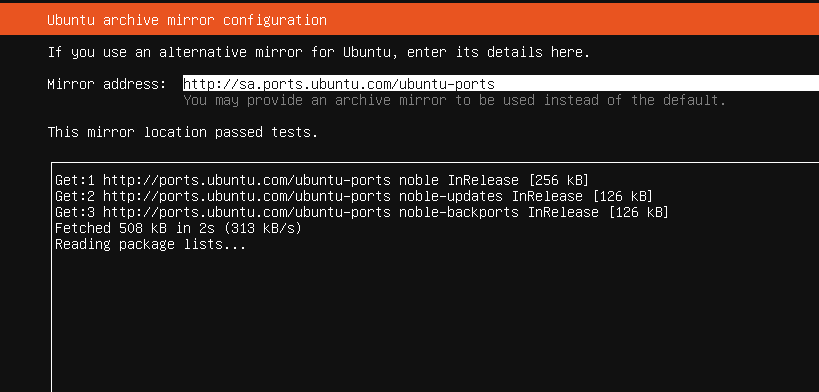
Passing Memory Tests
Future Work Recommendations
-
Thread-Based Parallelism
Evaluate pthread-based implementations and compare overhead.
-
Improved Work Distribution
Explore alternative decomposition strategies for better load balance.
-
Overhead Reduction
Investigate techniques such as process pooling or reduced synchronization.
-
Larger Problem Sizes
Test matrices larger than 2400×2400 to identify the crossover point.
-
Comparative Benchmarks
Compare against sequential and optimized baselines to quantify overhead costs.